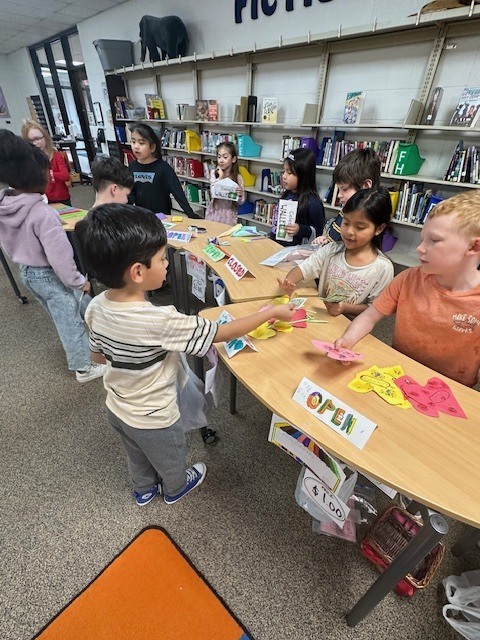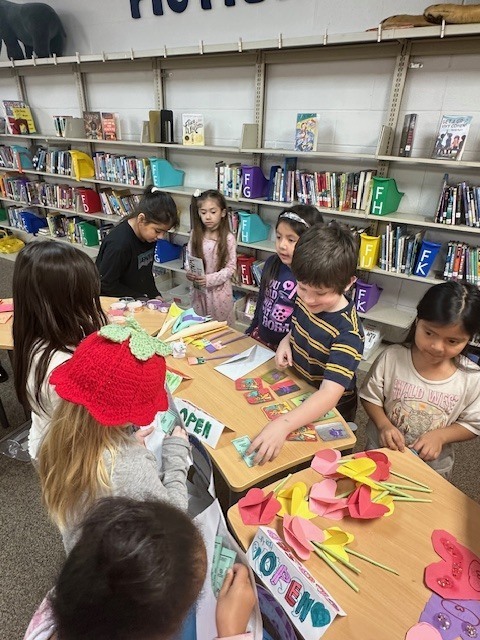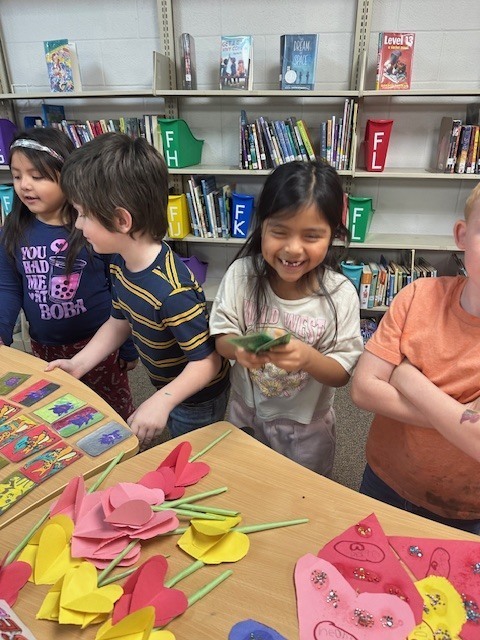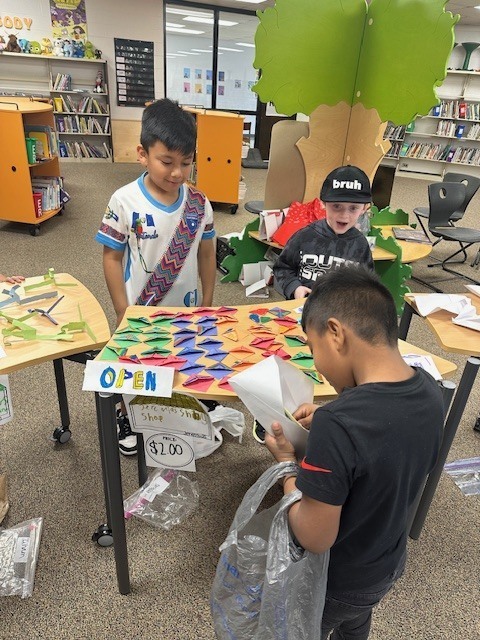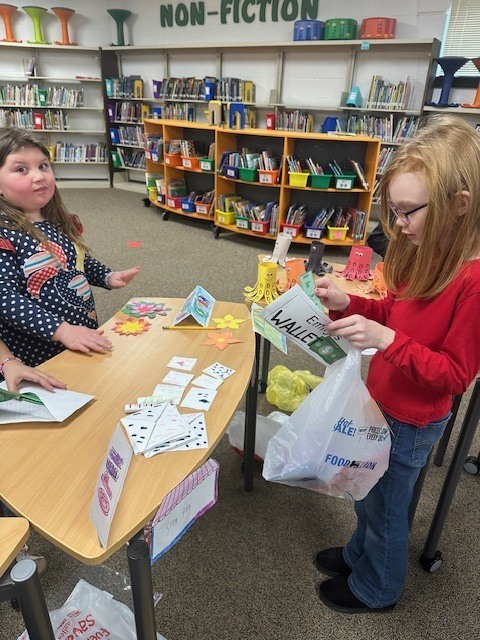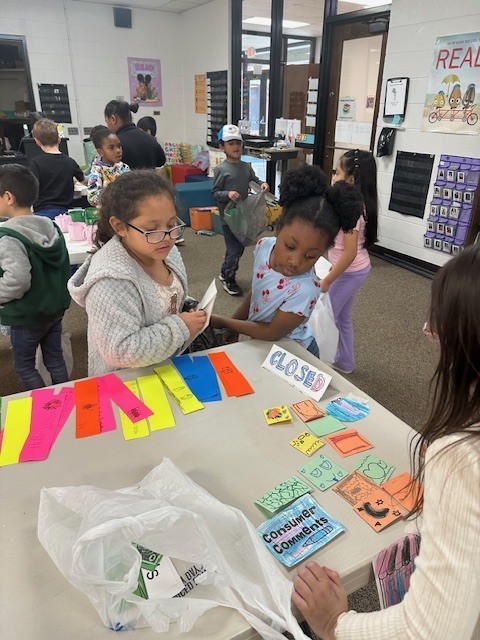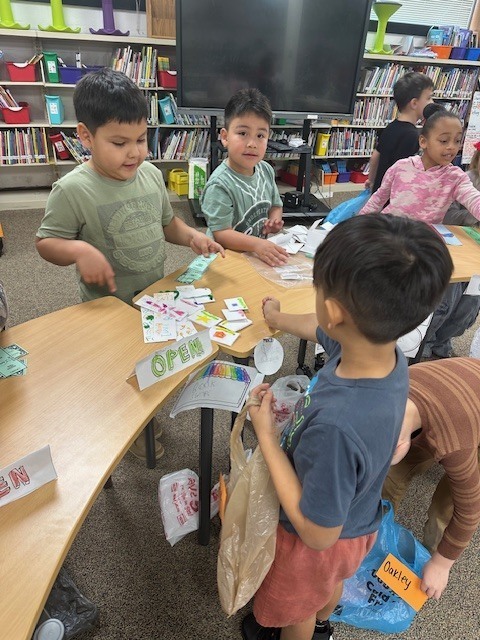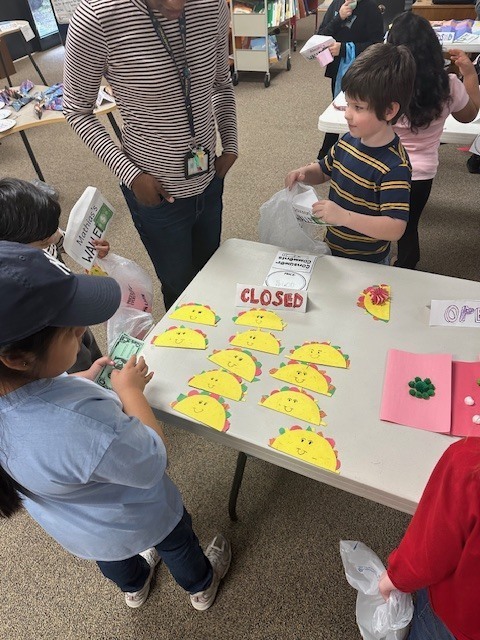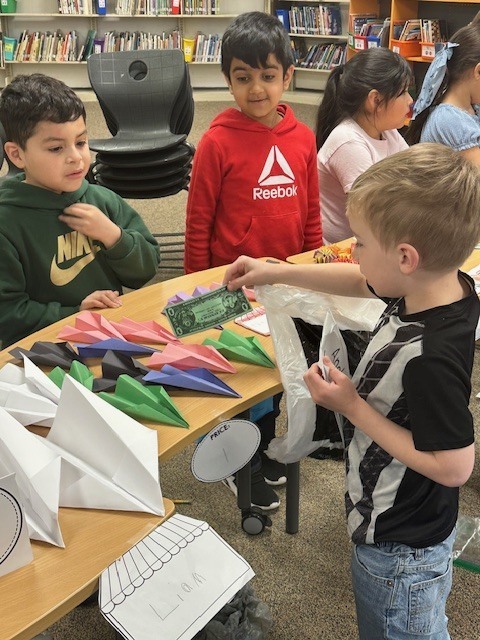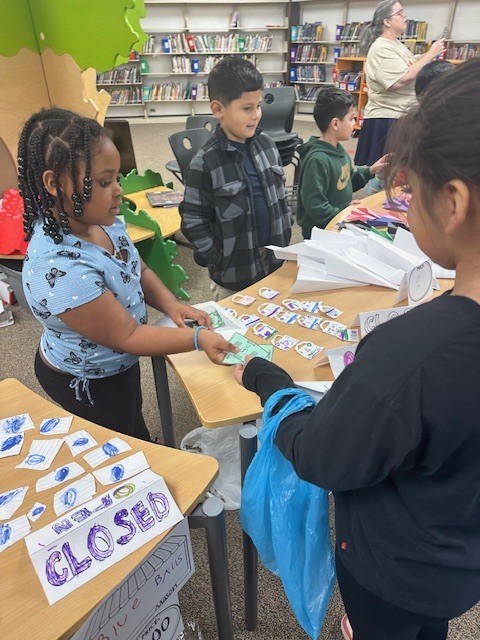
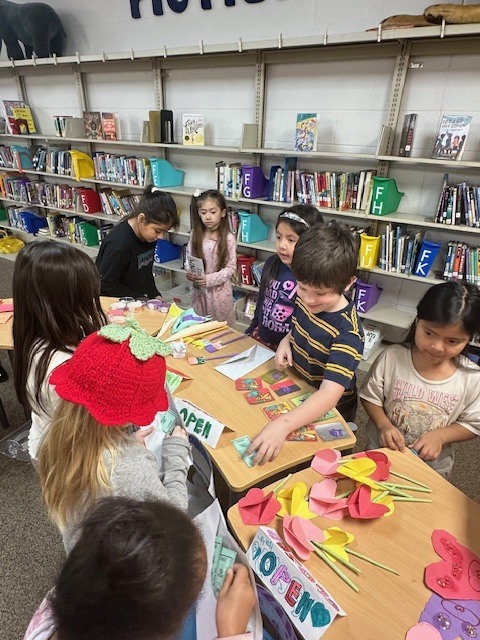
The media center at Ramseur Elementary was transformed into a bustling marketplace as students brought their Social Studies standards to life. Moving beyond textbooks, these young learners participated in Economics Day, a hands-on simulation where they didn't just study the market—they created it.
Before the "market" opened, the classrooms turned into miniature factories. Students used their understanding of scarcity and limited resources (1.E.1.1) to manufacture goods. Using a fixed set of supplies—like paper, beads, and markers—students had to decide which products would be the most "valuable" to their peers.
From hand-drawn bookmarks to beaded "friendship patterns," the students learned that because their time and materials were limited, they had to produce items efficiently.
The excitement peaked during the "Student Store" simulation. Students rotated roles, acting as both producers (selling their handmade goods) and consumers (buying from their classmates) using classroom currency.
Making Economic Choices (1.E.1.3): The students had to make tough decisions. If a classmate was selling a highly-coveted item for a high price, the consumer had to decide: Do I spend all my money on this one thing, or can I buy three smaller items elsewhere?
The event was a resounding success, proving that you're never too young to understand the "whys" behind the way the world works.